
History and lore are filled with examples of kings, knights, warriors, heroes, and a wide range of villains who took oaths or broke them, with consequences varying widely.
Families, dynasties, even empires themselves thrived or were destroyed by the act of making a promise and keeping or breaking it. All civilizations were, quite literally, built on promises. Whether oral or written, a man’s word was as solid as the stones that built his walls, castles, and temples, and just as enduring.
Yet despite the critical role oaths have played in human history, few people really understand them — especially those who make up modern pagan communities. The average person of today thinks of an “oath taker” as someone ultra-noble and dedicated to an equally noble cause, usually reporting to a “master” or “god.” Sadly, these fictional self-sacrificing men and women ask for, and usually get, nothing in exchange for their dedication. Many often die “glorious” deaths or, at the very least, suffer a great deal before their quest has been achieved. Not a very attractive prospect, and more like something out of a fairy tale than reality. Yet without The Oath, the pagan revival of the past half century would not have been possible and, unless we emphasize its importance, it cannot be sustained.
Sadly, oaths and kept promises are very scarce in today’s world. They are alarmingly declining and an endangered characteristic of human behavior. All too commonly, keeping one’s word at all is seen as almost quaint. And the insanity we see daily is a direct result.
In the past hundred years or so, too many at all levels of society have operated under the assumption that success is not measured in what one can promise and deliver, but by what one can get away with. This tendency has led to all sorts of havoc. And the pagan communities of the world have not been immune to the resulting entropy.
The oath — a solemn, formal declaration or promise to fulfill a pledge while calling upon a deity, a community, or a sacred object to bear witness — is a vital, inescapable component of European paganism. And one that must be fully understood and enacted for anything of worth to become real.
Words are words; deeds are deeds. We like to think of ourselves as a valiant people who prefer actions to words and often reserve our praise for those who do rather than say. But in this distinction, an oath stands unique in that it is both. The word is itself a deed, carrying the full weight of an action in this world. Like the deed that it is, for good or for ill, that weight is felt, and shared, by everyone who hears it or is tied to it.
Those of us who are dedicated to Asatru or other indigenous European spiritual and religious traditions have been trying to recapture or reconstruct the ways of our ancestors, a noble and very worthy cause a growing number of our people are discovering and promoting. If we should hope for these aspirations to ever result in something tangibly real, we must revive not not only the trappings of imagery and rituals from centuries past, but also the thinking and values that attend them. They are the social mechanisms that made those cultures grow and thrive, producing a people who literally went on to conquer the world. If we are to revive the greatness embodied in our ancient forebears, then we can ill afford not to think like them as well.
We know what an oath is, or at least think we do. But how can it work in this deceitful, honorless, often insane world with which we are forced to contend? How do we get from where we are to where we want and need to be as a people?
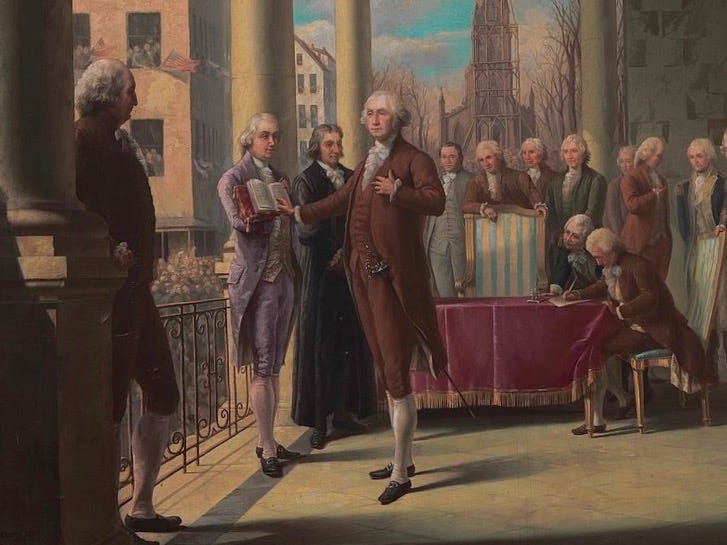
First, let all who would partake in an oath be reminded that the obligation flows in both directions. A knight follows his king because the king does something for him. The king bestows weapons and other riches, grants land, and can even arrange an appropriate marriage. In exchange, the knight lives in readiness to bear arms if summoned, and will fight in his king’s wars or accept other worthy assignments. The knight remains loyal to his liege unto death, but it is for a stake in something real that he gives his loyalty.
Both the king and the knight contribute to the relationship’s success, and the arrangement is one of mutual benefit. But if one fails to uphold the oath, both suffer materially as well as spiritually. The relationship then enters unknown, usually hostile territory. Oath breaking by either party was treated as a deadly serious affair.
One modern and sadly common example is the vow of marriage. A man and a woman marry by swearing oaths on rings as of old, to put themselves second to the stability of the home and the family that will descend from their union. But if at any point either of them place themselves individually above the inseparable Union of which they are both part, then the marriage vows made have been violated, and the foundations of the home are shaken. Just like the knight and king, when the agreement is breached either way, the relationship goes from being mutually beneficial to hostile. Both suffer tremendously in the consequent legal proceedings and generational trauma of dissolving that holy bond. Everyone tied to that oath, the children not least, suffers measurably in every aspect of life because of its breaking.
It’s a constant of civilization: breaking an oath always forces someone to pay a heavy price, often more than the one who is at fault.
In modern pagan communities, oaths are rightfully being treated with solemn seriousness as moments of great weight. They are understood intuitively to be turning points, during which words are spoken that bind, which cannot be retracted. Oaths are the cement, we are told, that will grow out of ancestral religion and preserve our people well into the future, part of an all-out effort to recapture the legendary nobility of our ancestors of centuries past. But are they the same sort of agreement kings, lords, knights, and others who once lived and died by? Does the same sense of honor that built our civilization still exist in today’s pagan communities?
In some places, where community members understand that oaths are a mutual agreement, the answer is “yes.” Unfortunately, too many people who make up modern paganism don’t understand this reality, and wrongly believe that oaths are one-sided affairs. Far from being agreements between free men and women, such oaths are being used to implement one-sided obedience. A member of a community gives an oath and is expected to obey it; yet only the obligation is transferred, nothing further. The oath taking party all too often doesn’t have to do anything, except give orders and expect obedience, usually receiving nothing in return.
It is frequently not seen as a tool to further the betterment of pagan communities, but to implement what can only be called a form of enslavement — the very condition so many of us fled from to get here.
Thus, instead of finding refuge in the religious traditions of our ancestors, and the resulting warmth of community and kin, we are left to deal with a new set of chains. Loyalty can never be one-sided, but among too many of our brethren in the Asa-faith, that’s what often results.
The situation gets even murkier and darker when matters of spirit or religion are involved. If one obeys the leadership of a pagan group, the reward may be something like “the gods will bless you for your service,” or “your dedication and sacrifice will be its own reward.” Not very tangible or specific, and a little too certain for mere mortals, which is what all clergy and spiritual leaders really are. Such rhetoric smacks of something else as well that almost always leads to dark places: a cult. Such practices would be more at home in the Christian Dark Ages or a present-day Islamic state.
It’s the classic problem of the big fish in the small pond. Modern pagans are a tiny minority of society. So much so, that they often avoid talking about their religious practices with others outside it, lest they face discrimination and hostility. Many have difficult, downtrodden backgrounds and have often felt powerless. When these people are made a “priest,” “priestess,” or some other lofty mantle, it can often go to their head. Such an elevation is more than the ego can often bear. Power then replaces piety, and history shows us where that always leads.
Misunderstanding what an oath really is, whether deliberate or accidental, can and will lead to abuse, ultimately holding our people back from their true nature and destiny. All because of a lack of understanding of what makes us, fundamentally, us.
Turn back to the root of our civilization, back before communities and the people who made them stopped being what mattered. Before the trappings of spiritual tyranny at the hands of those who invaded, conquered, and enslaved Western Civilization disrupted the course of history up to the present day. We cannot escape the pain and insanity of the modern world by embracing the methods, attitudes, and morality of those who robbed our people of their birthright centuries ago without remembering clearly who we are.
For we are not people of the desert sands; we are people of the trees, fields, rivers, and mountains of Europe. Our people were born surrounded by the green of life, not the brown of death. We are a people of honesty, honor, fairness, and justice. Our word was our bond and will be, must be, again.
The oath; the promise; the contract. The ability to agree to something and stick with it because we have a genuine stake in it. It’s what made us who we are. These are certainly not the one-sided commands obeyed by a slave, but mutually beneficial agreements between free men and women of good breeding and high standards. That is how civilizations rise to greatness and are maintained. And it’s how our people, our culture, our blood will endure, survive, rebuild, and thrive once more.